The Allure of Higo Kinko series 4: part 1― The Hayashi School: A Lecture at the Naniwa Kodōgu Kenkyūkai
- gallery陽々youyou

- Jan 10
- 8 min read
At the Naniwa Kodōgu Kenkyūkai in Osaka, a lecture on Higo kinko was delivered by Mitsuru Ito at Ikukunitama Shrine. This blog post follows the previous articles in the series—① Hirata family, ②Shimizu family, and ③ Nishigaki family —and presents ④-1 Hayashi School.
This series explores the aesthetic principles and distinctive characteristics of the four major lineages of Higo kinko in the following order: ① Hirata, ② Shimizu, ③ Nishigaki, and ④ Hayashi & Kamiyoshi. As the Hayashi and Kamiyoshi encompass a substantial amount of material, this section is divided into two parts: Part 4-1 focuses on the Hayashi School, and Part 4-2 will examine the Kamiyoshi School♡
The Appeal of Higo Kinko
Each of us encounters Higo kinko in a different way. Some may have acquired a piece simply because it felt appealing, without knowing much about its background. Regardless of the starting point, one thing is certain: the four principal schools of Higo kinko are highly individualistic.
While artistic styles can sometimes converge due to master–disciple relationships or shared regional origins, Higo kinko works are distinctly artistic, each lineage establishing its own unique style.
Rooted in the philosophy of samurai culture, Higo kinko ranges from refined and precise works to abstract expressions that resemble modern art.
The histories of four principal schools are relatively well documented through texts preserved by families such as Kamiyoshi, Shimizu, and Hirata, as well as through records connected to the Hosokawa and Matsui clans.
Fortunately for collectors, Higo kinko works exist in considerable numbers, making them well suited to collection.
Another appeal lies in the breadth of enjoyment, extending from fittings alone to complete koshirae.

The Hayashi Family
Eighteen years have passed since my father published Hayashi & Kamiyoshi in 2008. In the years that followed, his research on Higo kinko has continued to develop. This progress has been aided by valuable materials provided by descendants of Hirata Hikozō, as well as new historical perspectives introduced in Inaba Tsuguharu’s 2018 publication “Hosokawa Tadatoshi”. His work notes that the relationship between Tadatoshi and Hosokawa Sansai had deteriorated to the point that they had no communication whatsoever. It raises the possibility that Hayashi Matashichi may not have been received direct instruction from Sansai.
The Hayashi and Kamiyoshi schools become easier to understand in terms of style, iron quality, and historical background when considered separately from the Hirata, Nishigaki, Shimizu lineage, which traces its origins to Hirata Hikozō.
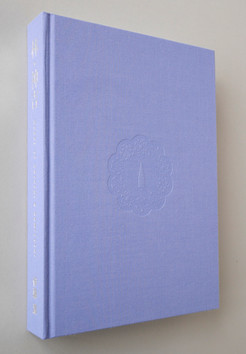
Pages 6–7 of “Hayashi & Kamiyoshi” present a well-organized genealogy of the Hayashi family, revealing that Matashichi’s father, Seibei, and his elder brother, Yasuke Shigekatsu, were gunsmiths. A magazine, “Tsuba no Kai” in Taisho 8 (1919) records that:
“Seibei Tomoshige (later known as Katsumitsu) served Katō Kiyomasa, held a stipend of 300 koku, resided in Kasuga village of Akita district in Higo province, and worked both as a gunsmith and a tsuba craftsman.”
Because the Hayashi family were craftsmen under the Katō clan, when Hosokawa Tadatoshi entered Higo in Kanei 9 (1623) as the first lord of the Kumamoto domain, Matashichi was living as a rōnin lodging with the Ōki family. His father and brother were likely there as well.
After being taken into Tadatoshi’s service, the Hayashi family appears to have settled in Yokote village, as suggested by the inscription “Yokote Matashichi” (横手又七) found on a Niyū zu tsuba bearing chrysanthemum and bamboo. Later, Matashichi likely worked in neighboring Kasuga Village after becoming independent as a tsuba artisan.
Today, Kasuga village corresponds to Kasuga in Nishiku, Kumamoto city while Yokote lies across the Nishi and Chūō wards—adjacent neighborhoods. Notably, Yokote is home to Kichijō-ji temple, where the Hirata family graves are located, as well as Myōkai-ji temple (now a dry landscape garden), one of Hosokawa Tadatoshi’s burial sites. The distance between these locations is approximately 400 meters (a 6 minute walk).




First Generation: Hayashi Matashichi
Hayashi Matashichi was born in Keichō 18 (1613) and also used the names Shigeharu and Shigeyoshi. He passed away in 1699 (Genroku 12) at the age of 87. He was retained by the Hosokawa family with a stipend of twenty-person rations.
Matashichi was born in the same year as Nishigaki Kanshirō, one of the four principal masters of Higo kinko. Although Matashichi’s period of activity—from the late Kanei years (around 1635), when the spirit of the Momoyama period still lingered, until his death in Genroku 12—overlaps closely with Kanshirō’s. However, their artistic styles differ markedly.
The existence of signed matchlock guns attributed to Matashichi is particularly intriguing. The verticality and precision of his sukashi work strongly suggest the influence of his background as a gunsmith.
His nunome-zōgan is executed with great accuracy, yet rigidity, resulting in a refined and restrained expression. His iron ground includes both migaki-ji (polished) and gama-hada finishes, created by acid-etching to produce texture.
In contrast to Kanshirō’s improvisational approach—embracing a form marked by organic irregularity and forging cracks caused by Yakite, Matashichi carefully selected his iron, determined each form with precision, and devoted time to every stage of the work. This meticulous approach, as described in “Hayashi・Kamiyoshi”, explains why Matashichi’s surviving works are relatively in small numbers compare to Kanishirō.
Among his extant examples, 11 works bear gold inlaid signatures, 3 works have incised signatures (kiritsuke-mei), and the majority are unsigned.


Second Generation: Hayashi Shigemitsu
Shigemitsu was born in Kanbun 7 (1667) and passed away at the age of 78 in Enkyō 1 (1744). As he is said to have been born when Matashichi was already 54 years old, it is also possible—given Edo-period customs of succession—that he was in fact an adopted heir, chosen from among capable disciples rather than a biological son.
He was retained by the Hosokawa clan with a stipend consisting of five-person rations together with an additional allowance of fifteen koku of kirimai (rice or money). His period of production spans the Genroku to Kyōhō period, a time that also marks a broader cultural transition from samurai-centered aesthetics toward the rising influence of chōnin (town people) culture. While the prevailing taste of this period favored polished iron surfaces (migaki-ji), Shigemitsu produced many works finished with yakite, recalling the approach seen in the work of the first-generation Nishigaki Kanshirō. In contrast to Matashichi’s pursuit of precision and flawless execution, Shigemitsu’s style embraces a gently irregular form, resulting in works of quiet warmth and depth of expression.
Most of his works are unsigned. Signed examples are rare. Furthermore, during the Kyōhō Reforms, efforts were made to reinforce samurai discipline, and although earlier regulations under the Buke shohatto had strictly controlled sword length, these restrictions were gradually relaxed. As a result, longer swords and larger tsuba came into fashion. Reflecting this trend, Shigemitsu produced many large-scale tsuba. At the time, the period’s emphasis on frugality and restraint, works incorporating inlay are relatively few.


Third Generation: Hayashi Tōhachi
Tōhachi was born in Kyōhō 8 (1723) and also used the names Shigeyoshi and Fusayoshi. He passed away at the age of 69 in Kansei 3 (1791). As he is said to have been born when Shigemitsu was already 56 years old, it is likewise possible—following Edo-period customs—that he was an adopted heir selected from among accomplished disciples.
Like Shigemitsu, he was retained by the Hosokawa clan with a stipend consisting of five-person rations together with an additional allowance of fifteen koku of kirimai (rice or money). Unlike Shigemitsu’s period of activity during the Kyōhō era, Tōhachi’s productive years fall primarily within the Tanuma period—a time marked by floods and famines across the country, as well as large-scale peasant uprisings in the Kantō region. It was an unsettled period.
The kinko of the same generation include Ichinomiya Nagatsune, Tsuno Jinpou, Yanagawa Naomitsu, Ōmori Teruhide, and Hamano Noriyuki. Tōhachi’s style evokes an atmosphere that recalls his grandfather Matashichi, yet his works are consistently disciplined in construction, with slight thickness at the edges of the sukashi. The color and luster of the iron are also uniform throughout. Unlike Shigemitsu, no examples are known to incorporate yakite finish. Nearly all of his inlay motifs are katsura-bishi (diamond-shaped) designs.
As stated in “Hayashi・Kamisyoshi”, “Tōhachi was an artisan who took Matashichi as his model and established the Hayashi school style; this style was subsequently carried on by the fifth-generation Matahei, as well as by Kamiyoshi Masatada, Fukanobu, and Rakujū.”
Perhaps reflecting an era in which long swords were no longer commonly worn, Tōhachi’s tsuba tend to be somewhat smaller in scale. Unsigned works form the core of his oeuvre. Only a single tsuba bearing the Tōhachi signature is known to survive, along with a small number of early works signed with his youthful name, “Fusayoshi” (房吉)

Fourth Generation: Hayashi Heizō
Heizō was born in Enkyō 1 (1744) and used the name Shigetsugu. He passed away at the age of 41 in Tenmei 4 (1784). As noted in “Hayashi・Kamiyoshi”, “Because Shigemitsu was born when Matashichi was already 54 years old, and Tōhachi likewise when Shigemitsu was 56, the Hayashi family experienced slower generational transitions compared to the Nishigaki and Shimizu families.”
Given that Heizō passed away when Tōhachi was already 61 years old, it is possible that he died shortly after succeeding to the headship of the family. In Higo Kinko Taikan, a tsuba is recorded bearing the inscription “Hayashi Shigetsugu, made at the age of eighty-seven.” However, since Shigetsugu died at 41, such an inscription cannot be historically accurate, and regrettably this attribution must be considered untenable.
Fifth Generation: Hayashi Matahei
Matahei was born in Meiwa 7 (1770) and also used the names Shigehisa, Shigeyuki, Shigekatsu, and Shigefusa. He died in Bunsei 6 (1823) at the age of 54. He was born when the fourth-generation Shigetsugu (Heizō) was 26 years old, and when Shigetsugu passed away, Matahei was still only 14. It is therefore clear that he faced considerable difficulty in assuming the family headship at such a young age.
As my father writes in “Hayashi・Kamiyoshi”, “The third-generation Tōhachi, acting on the orders of the domain lord, transmitted the Hayashi techniques to Kamiyoshi Masatada. One may surmise that this was due to concern that the Hayashi tradition might otherwise decline, as the future fifth-generation Matahei, born in Meiwa 7, was still only 14 years old at the time.”
Because Matahei had a long productive career, one can sense his determination to preserve and uphold the Hayashi tradition even after its technical lineage had passed to the Kamiyoshi family. His style closely resembles that of the third-generation Tōhachi, with somewhat bolder kebori engraving. During the course of my father’s research for “Hayashi・Kamiyoshi”, identifying marks were discovered on surviving signed tsuba, which in turn led to the identification of many additional works. These marks consist of square chisel impressions—three above and five below the nakago-ana. Many works also bear supplementary inscriptions such as “Hayashi, tenth generation.”


Closing thoughts
At the Naniwa Kodōgu Kenkyūkai, Mitsuru Ito presented a comprehensive overview of the allure of Higo kinko. In this blog series, however, we have chosen to examine each of the four principal schools individually.
This blog has focused on the Hayashi family, whose origins lie in the tradition of matchlock gunsmiths. The works of the first-generation Matashichi, marked by disciplined execution and a sense of dignity, stand in clear contrast to the improvisational style of the contemporary first-generation Nishigaki Kanshirō. The second-generation Shigemitsu, by comparison, produced works characterized by gentle asymmetry and a rich sense of depth. The third-generation Tōhachi, whose style resonates with that of Matashichi, established the Hayashi aesthetic and transmitted its techniques to Kamiyoshi Masatada. Even after the Hayashi tradition had passed to the Kamiyoshi family, Matahei continued to strive earnestly, leaving behind many outstanding works. In this way, each generation of the Hayashi family produced works imbued with its own distinct worldview.
In the next blog, we will present “The Allure of Higo Kinko series 4ーpart 2 The Kamiyoshi school,” including three examples of a “mini bidding-style tsuba kantei.” Until then—stay tosogu & sword minded.
References:


"Hosokawa Tadatoshi" by Inaba Tsuguharu
Let us inbox you Samurai Newsletters! SIGN UP HERE!


Happy New Year! Very nice blog post. It allowed me to deepen my understanding and aspiration for a tsuba in my collection attributed to the Hayashi School of Higo Province by a previous owner. Thank you so much. 😄